Indonesian Textiles
Indonesia with a population of 150 million and its more than 350 ethnic groups, living in an archipelago of 15,000 islands arching 3,500 miles, has a cultural expression and character in its weaver’s art that will remain a source of exotic fascination.
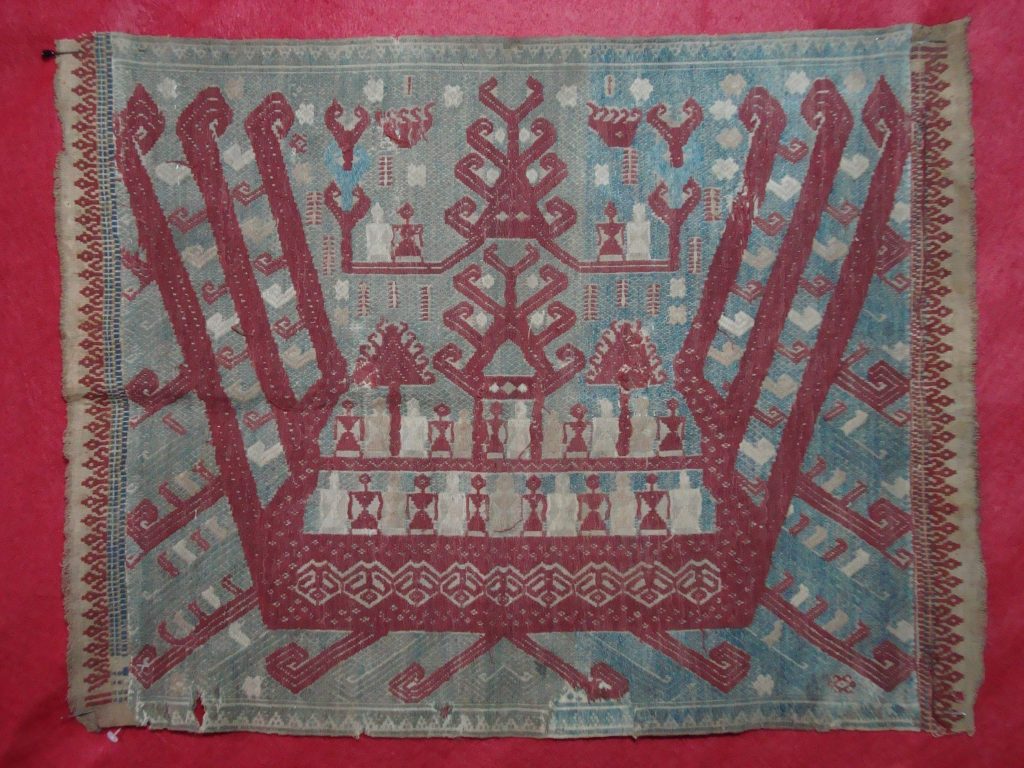
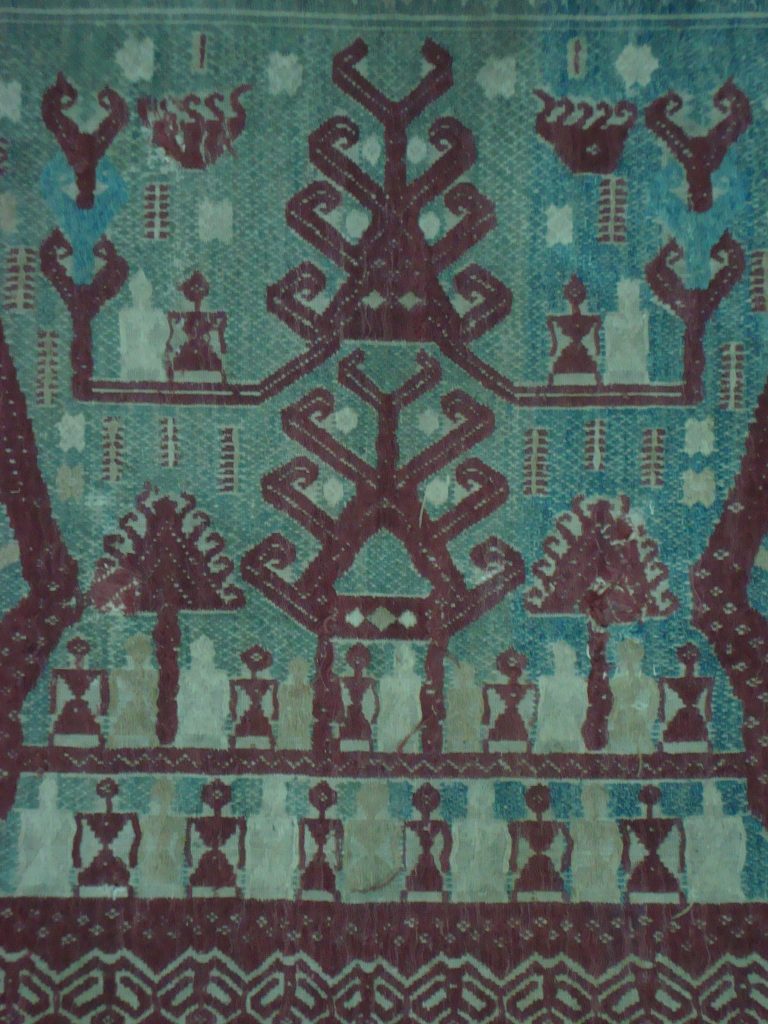
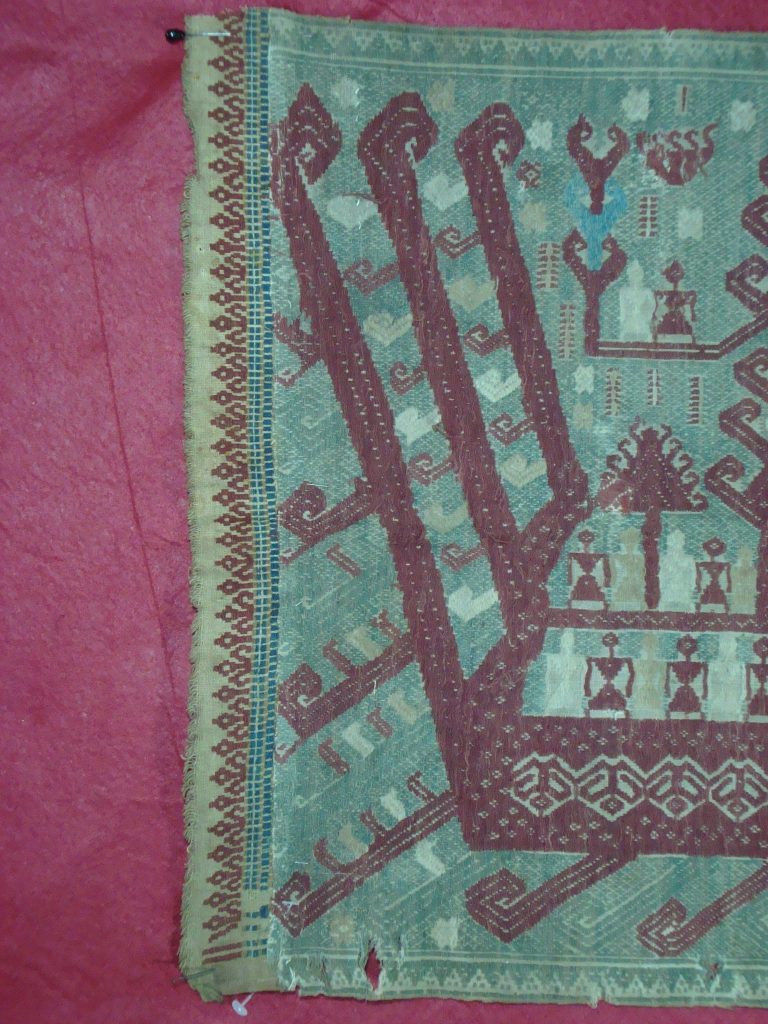
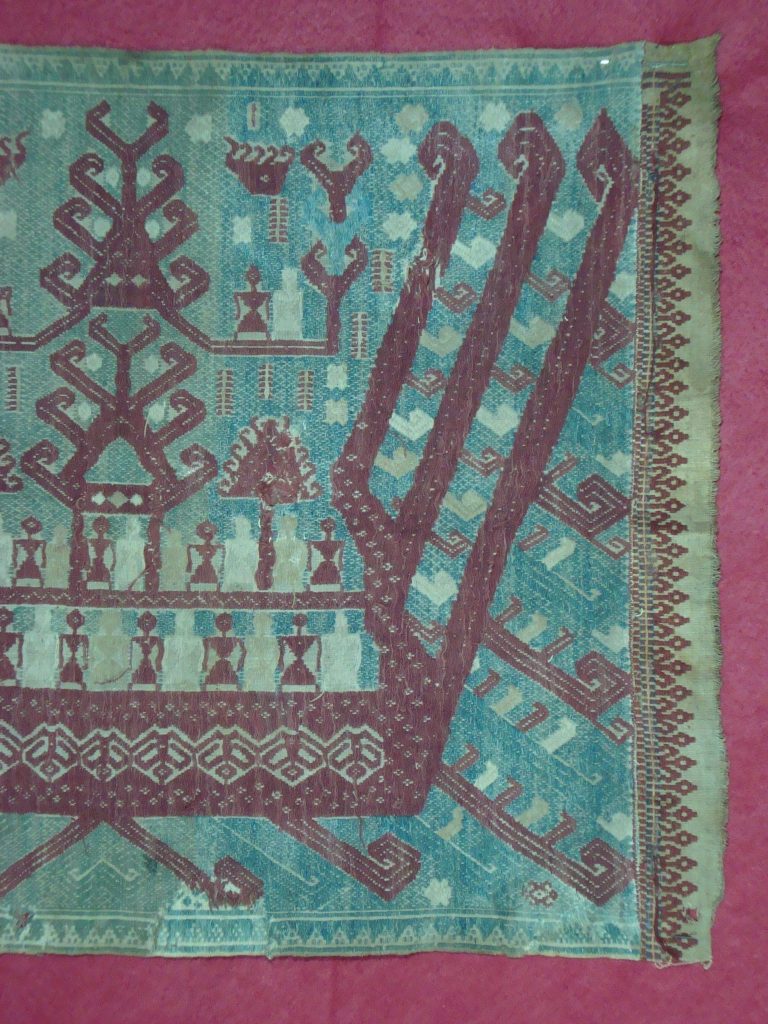
The enormous cultural influences from the mainland and from traders all over the world, fortune hunting in spices, coffee and sandalwood and combined with the rich and diverse local cultures gives rise to a textile art ranging from silk to cotton and bast fiber, and using a great variety of techniques and processes for making ritual and ceremonial hangings and clothing and also the simple daily garments.
Sumatra’s strategic location as a guardian of the main trade route to Southeast Asia, accounts for the variety and quality of this form of cultural expression that is unparalleled anywhere else in the world in a single island. Another factor contributing in the different types of textiles in Sumatra is the wide variety of isolated ethnic groups and the rank system brought about by wealth through its pepper trade at that time. The ranks and titles were manifested though giving elaborate feast and ceremonies displaying food and textiles and other wealth. This in turn demands the use of elaborate clothing to add to the splendor of the feasts. These feasts were held in conjunction with life-crisis rites ranging from birth, circumcisions, marriage and death, often lasting for days for a wealthy landlord.
The decline of the textile art in Sumatra came about in late 19th or early 20th century. Nobody can be sure of the reasons for its decline but many attributed the decline to the collapse of the pepper trade, changing traditions and the abolition of slavery in the mid-nineteen century.